
Car park and deck flooring systems face some of the harshest environmental and structural conditions in modern construction. Constant vehicle movement, water seepage, tyre friction, UV exposure, oil spills, and changing temperatures place enormous stress on these surfaces every single day.
Yet many parking decks and car park areas across India continue to experience premature flooring failures because critical flooring requirements are overlooked during planning and installation.
Cracks, water leakage, slippery surfaces, surface peeling, potholes, and structural deterioration are common issues caused by poor flooring specifications and improper protection systems.
According to National Institute of Building Sciences, parking structures require specialized protective systems because they are constantly exposed to traffic wear, moisture intrusion, and environmental damage.
For builders, contractors, developers, and facility owners, selecting the right flooring system is essential not only for durability but also for long-term structural protection and safety.
At Chemsol Polymer Industries Pvt. Ltd., industrial-grade flooring and deck protection systems are designed specifically for high-performance environments where durability and waterproofing are critical.
Why Car Park and Deck Flooring Requires Specialized Protection
Many contractors treat parking decks like regular concrete surfaces. This is one of the biggest mistakes in commercial and infrastructure projects.
Car parks experience continuous stress from:
- Vehicle load movement
- Water penetration
- Fuel and oil spills
- UV exposure
- Thermal expansion and contraction
- Tyre abrasion
- Rainwater accumulation
Without proper flooring specifications, the concrete substrate starts deteriorating rapidly, leading to structural damage and costly repairs.
According to American Concrete Institute, parking structures require protective surfacing systems to reduce concrete deterioration and extend structural life.
Modern car park flooring systems must combine waterproofing, abrasion resistance, flexibility, and durability into one integrated solution.
1. Waterproofing Resistance
One of the most overlooked flooring requirements in Indian parking structures is waterproofing performance.
Water seepage through parking decks can cause:
- Concrete deterioration
- Steel reinforcement corrosion
- Ceiling leakage
- Structural weakening
- Mold and dampness
Water penetration becomes even more severe during Indian monsoon seasons, especially in open or semi-open parking decks.
A proper deck flooring system should include:
- Waterproof membrane protection
- Crack-bridging capability
- Moisture resistance
- Long-term adhesion
Without waterproofing protection, even high-quality concrete structures begin deteriorating much earlier than expected.
At Chemsol Polymer’s Car Park Flooring Solutions, flooring systems are engineered to provide both surface durability and waterproofing protection for parking structures exposed to harsh environmental conditions.
2. UV Resistance for Open Parking Areas
Many Indian contractors install flooring systems that perform well indoors but fail under sunlight exposure.
Open parking decks experience constant UV radiation, which can cause:
- Surface fading
- Coating brittleness
- Cracking
- Delamination
- Loss of flexibility
UV-resistant flooring systems are critical for:
- Rooftop parking areas
- Open decks
- Commercial parking structures
- Outdoor ramps
Polyurethane-based deck systems are commonly preferred because they provide superior UV stability compared to conventional coatings.
This becomes particularly important in Indian cities with high heat exposure and extreme summer temperatures.
3. Anti-Skid Surface Protection
Parking decks become extremely dangerous when surfaces become slippery during rain, oil spills, or vehicle leakage.
Poor traction can lead to:
- Vehicle skidding
- Pedestrian slips and falls
- Ramp accidents
- Reduced braking stability
Anti-skid flooring systems improve both pedestrian and vehicle safety by creating textured surfaces with enhanced grip.
According to OSHA Safety Guidelines, slip-resistant surfaces play an important role in reducing workplace and public safety risks.
Slip-resistant flooring is especially important in:
- Parking ramps
- Entry and exit points
- Basement parking
- Wet zones
- Vehicle turning areas
For commercial projects, anti-skid performance should never be treated as an optional feature.
4. Heavy Vehicle Load Resistance
Car parks and parking decks must handle continuous vehicle loads every single day.
These loads include:
- Cars
- SUVs
- Commercial vehicles
- Delivery trucks
- Maintenance equipment
Weak flooring systems often crack under repetitive traffic stress.
Heavy-duty flooring systems should provide:
- High compressive strength
- Load-bearing capability
- Impact resistance
- Surface durability
In commercial complexes, malls, hospitals, airports, and residential towers, parking decks experience constant tyre pressure and turning friction that accelerate floor wear.
Industrial-grade flooring systems help prevent premature cracking and surface breakdown under repeated vehicle movement.
5. Crack-Bridging Flexibility
Concrete naturally expands and contracts because of temperature changes.
In India’s climate conditions, parking structures experience constant thermal movement caused by:
- Intense summer heat
- Rainwater exposure
- Day-night temperature variation
Rigid flooring systems often fail because they cannot absorb structural movement.
Crack-bridging flooring systems are designed to accommodate substrate movement without surface failure.
This helps reduce:
- Surface cracking
- Water penetration
- Coating delamination
- Structural exposure
Flexible polyurethane systems are widely used in deck applications because they maintain elasticity even under changing weather conditions.
6. Chemical and Oil Resistance
Parking decks are constantly exposed to:
- Fuel leakage
- Brake fluid
- Engine oil
- Grease
- Cleaning chemicals
- Battery acids
Without chemical-resistant flooring, these substances penetrate concrete surfaces and weaken the substrate over time.
Chemical-resistant flooring systems help:
- Protect structural concrete
- Reduce staining
- Improve surface lifespan
- Simplify maintenance
Oil-resistant flooring also improves aesthetics and cleanliness inside commercial parking facilities.
According to Stonhard Industrial Flooring Systems, chemical-resistant flooring systems significantly improve durability in environments exposed to automotive fluids and industrial chemicals.
7. Abrasion and Tyre Wear Resistance
Vehicle tyres generate constant friction on parking surfaces, especially in:
- Turning zones
- Entry ramps
- Exit areas
- High-traffic parking sections
This continuous movement causes surface abrasion and coating wear.
Abrasion-resistant flooring systems are essential to maintain long-term performance and appearance.
Without abrasion resistance, parking decks begin showing:
- Surface erosion
- Dust generation
- Aggregate exposure
- Uneven surfaces
Industrial-grade polyurethane and epoxy systems provide better resistance against tyre friction and mechanical wear compared to untreated concrete surfaces.
This is particularly important in high-traffic commercial buildings where parking decks operate continuously throughout the day.
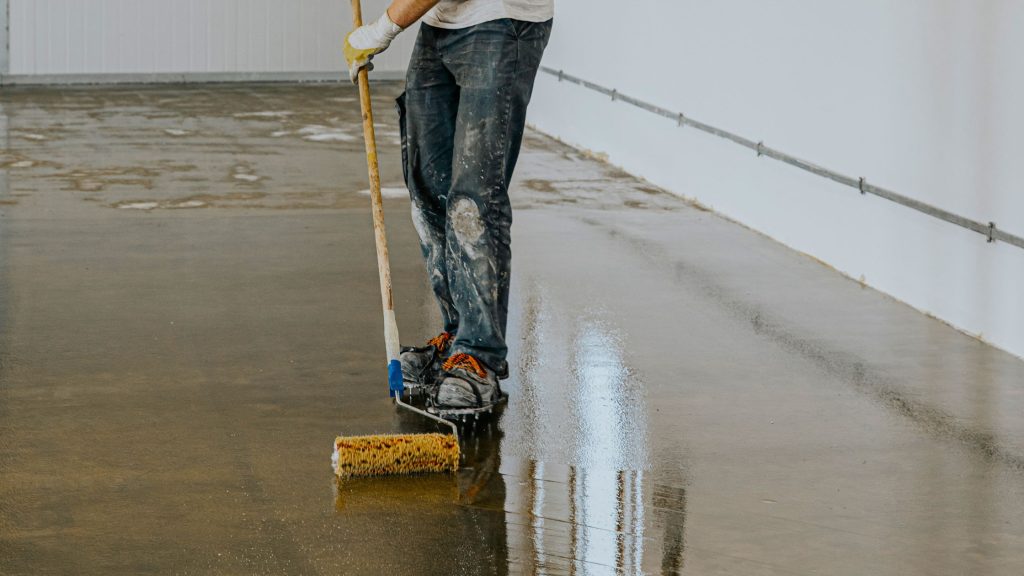
8. Proper Surface Preparation Before Application
Many flooring failures happen because contractors skip proper surface preparation steps.
Even premium flooring products fail if the substrate is not properly prepared.
Common preparation mistakes include:
- Inadequate grinding
- Moisture contamination
- Poor crack treatment
- Weak concrete profiling
- Surface dust retention
According to Chemsol Polymer’s Surface Preparation Guide, flooring performance depends heavily on scientific preparation methods including:
- Shot blasting
- Mechanical grinding
- Surface cleaning
- Moisture testing
- Crack repair
- Surface profiling
Improper preparation often leads to bubbling, peeling, delamination, and reduced flooring lifespan.
Professional surface preparation is essential for achieving proper bonding and long-term durability.
9. Long-Term Maintainability
Many contractors focus only on installation cost instead of lifecycle performance.
Cheap flooring systems often result in:
- Frequent repairs
- Higher maintenance expenses
- Operational disruptions
- Premature replacement costs
A high-performance parking deck flooring system should provide:
- Long operational life
- Minimal maintenance
- Faster cleaning
- Reduced repair frequency
- Better durability under Indian climate conditions
Long-term maintainability becomes especially important in:
- Commercial towers
- Residential complexes
- Shopping malls
- Airports
- Hospitals
- IT parks
Modern flooring systems are designed not only for protection but also for reduced maintenance burden over time.
Why Indian Contractors Often Overlook These Flooring Requirements
Many parking deck failures happen because flooring decisions are made based only on short-term budgets.
Common mistakes include:
- Using indoor coatings outdoors
- Ignoring waterproofing systems
- Skipping surface preparation
- Choosing low-cost materials
- Avoiding anti-skid textures
- Ignoring UV exposure
These shortcuts may reduce initial costs but usually create much larger repair expenses later.
Parking deck flooring should always be treated as a long-term structural protection system rather than a simple surface coating.
Why Builders and Developers Choose Chemsol Polymer
Chemsol Polymer Industries Pvt. Ltd. specializes in high-performance flooring systems for:
- Car parking decks
- Commercial complexes
- Residential projects
- Industrial facilities
- Infrastructure projects
- Heavy traffic environments
Their flooring systems are engineered for:
- Waterproofing protection
- UV resistance
- Anti-skid performance
- Heavy vehicle movement
- Chemical resistance
- Long-term durability
By combining advanced polymer technology with scientific installation practices, Chemsol delivers flooring systems built specifically for Indian environmental and operational conditions.
Conclusion
Parking decks and car park areas face constant structural and environmental stress that ordinary flooring systems cannot handle effectively.
From waterproofing and anti-skid safety to abrasion resistance and crack-bridging flexibility, every flooring specification plays a critical role in long-term performance.
Ignoring these requirements often results in:
- Water leakage
- Structural deterioration
- Surface failure
- Higher maintenance costs
- Safety hazards
For builders, contractors, and facility owners, investing in the right flooring system helps improve durability, safety, operational efficiency, and lifecycle value.
Partnering with experienced specialists like Chemsol Polymer Industries Pvt. Ltd. ensures parking deck flooring systems are engineered to perform reliably under India’s demanding environmental and traffic conditions.