
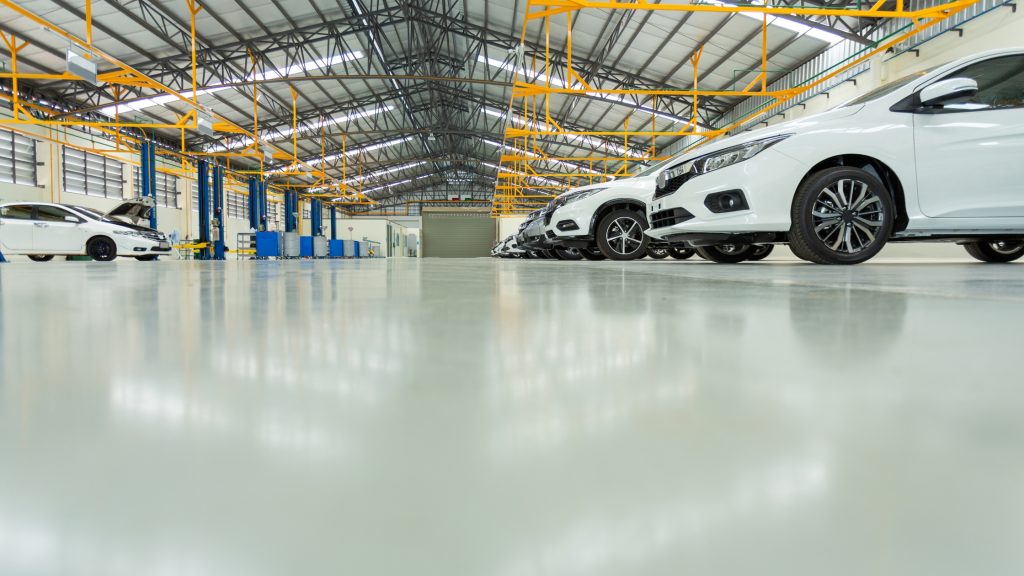
Industrial floors go through constant pressure every day. Heavy machinery, forklift movement, oil spills, chemical exposure, foot traffic, cleaning cycles, and production loads all affect the condition of the floor over time.
In heavy-duty industrial areas, regular concrete is often not enough on its own. It may start dusting, cracking, staining, or wearing down when exposed to demanding operating conditions. This is why many factories, warehouses, automobile plants, engineering units, and manufacturing facilities prefer epoxy flooring systems.
Epoxy flooring is not just about creating a clean and glossy surface. When selected and applied correctly, it becomes a protective layer that improves durability, safety, hygiene, and long-term floor performance.
For industries looking for reliable industrial flooring solutions, epoxy flooring offers a strong balance of strength, chemical resistance, cleanability, and cost efficiency.
Why Heavy-Duty Industrial Areas Need Special Flooring
Heavy-duty industrial areas are different from regular commercial or residential spaces. The flooring in these zones must support continuous operations without frequent repair or downtime.
Factory floors are exposed to:
- Heavy machinery loads
- Forklift and trolley movement
- Chemical spills
- Oil and grease exposure
- Impact from tools and materials
- Dust, abrasion, and surface wear
- Frequent cleaning and washdowns
- Worker movement and safety risks
If the flooring system is not designed for these conditions, the surface can fail much earlier than expected. This can lead to safety hazards, production delays, maintenance costs, and repeated shutdowns.
That is why epoxy flooring is widely preferred for industrial environments where strength and performance matter every day.
1. Epoxy Flooring Handles Heavy Machinery Movement
Heavy-duty industrial areas often have machines, equipment, conveyors, forklifts, pallets, and loaded trolleys moving across the floor throughout the day.
Why this matters
Regular concrete can weaken under repeated movement and pressure. Over time, this can lead to surface dusting, cracks, uneven wear, and damaged traffic lanes.
In facilities like automobile and engineering plants, the floor must handle continuous load without losing surface strength.
How epoxy flooring helps
Epoxy flooring creates a tough protective layer over the concrete surface. It improves the floor’s ability to resist mechanical stress, abrasion, and repeated movement.
A properly designed epoxy system helps protect high-traffic zones such as:
- Production lines
- Assembly areas
- Loading bays
- Machine rooms
- Forklift paths
- Maintenance zones
This makes epoxy flooring a practical choice for facilities where floors are constantly under pressure.
2. Epoxy Flooring Offers Strong Abrasion Resistance
Abrasion is one of the most common reasons industrial floors start looking worn out. It happens when tyres, pallets, tools, machinery, and foot traffic continuously rub against the surface.
Where abrasion happens most
Abrasion is commonly seen in:
- Warehouses
- Manufacturing units
- Engineering workshops
- Packaging areas
- Dispatch zones
- Loading and unloading areas
If the floor does not have proper protection, the top surface may start wearing away. This can create dust, rough patches, and weak areas.
How epoxy flooring helps
Epoxy flooring provides a durable surface that resists daily wear and tear. It helps maintain the condition of the floor even in busy industrial zones.
This is especially useful for facilities that want to reduce frequent floor repairs and keep operations running smoothly.
3. Epoxy Flooring Protects Against Oil and Chemical Spills
Many industrial spaces deal with oils, lubricants, solvents, cleaning agents, acids, alkalis, and process chemicals. These substances can damage untreated concrete if they are not cleaned quickly.
Why is chemical exposure risky
Concrete is porous. This means liquids can seep into the surface and cause staining, weakening, or long-term damage.
In chemical, engineering, food, pharma, and manufacturing environments, the wrong flooring system can quickly become a maintenance problem.
How epoxy flooring helps
Epoxy flooring can be designed to provide resistance against oil, grease, chemicals, and stains. This helps prevent spills from penetrating the concrete surface.
For areas with stronger chemical exposure, businesses can also explore specialised chemical resistant flooring systems that are selected based on the type of chemical, concentration, exposure duration, and cleaning requirements.
This makes epoxy flooring highly useful for areas where chemical protection is part of daily operations.
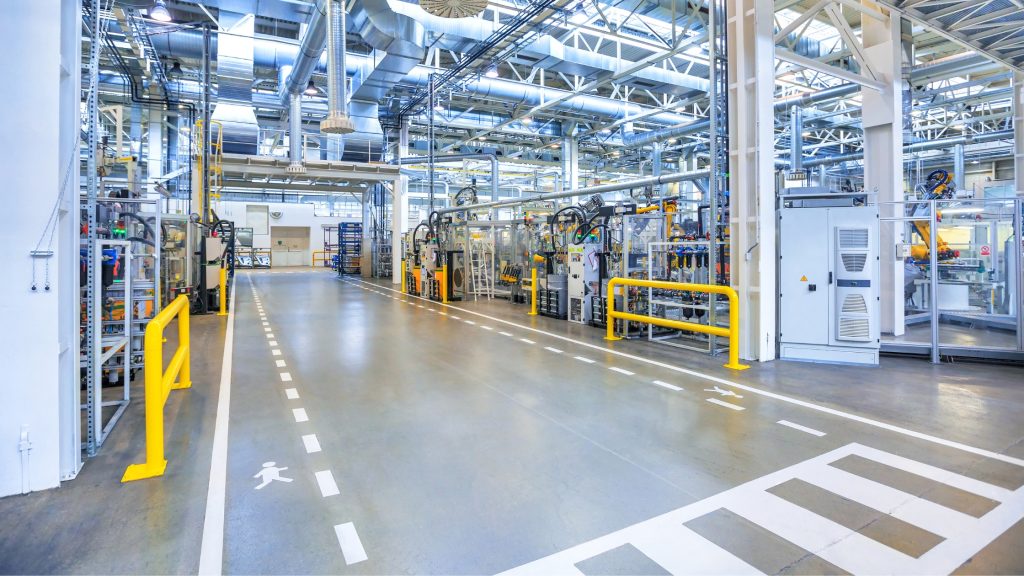
4. Epoxy Flooring Creates a Seamless and Easy-to-Clean Surface
Cleanability is an important requirement in many industrial facilities. Dust, dirt, oil, chemicals, and production waste can collect on uneven or damaged floors.
Why seamless flooring matters
Floors with cracks, joints, and rough patches are harder to clean. They may trap dust, bacteria, moisture, and contaminants.
This becomes even more important in food, pharma, and healthcare environments, where hygiene and cleanability are key operational requirements.
How epoxy flooring helps
Epoxy flooring can create a smooth and seamless finish. This makes regular cleaning easier and helps maintain a more hygienic surface.
A seamless epoxy floor supports:
- Easier sweeping and mopping
- Faster spill cleanup
- Better housekeeping
- Reduced dust collection
- Cleaner production zones
- Improved visual appearance
This is one reason epoxy flooring is preferred in facilities where hygiene, cleanliness, and maintenance efficiency are important.
5. Epoxy Flooring Can Improve Workplace Safety
Industrial flooring is not only about strength. It also plays an important role in worker safety.
Wet floors, oily surfaces, ramps, and high-traffic areas can increase the risk of slips and falls. In busy industrial spaces, even a minor slip incident can affect productivity and create safety concerns.
Why safety-focused flooring is important
Industrial areas may have:
- Oil spills
- Water exposure
- Dust accumulation
- Forklift movement
- Pedestrian walkways
- Ramp areas
- Loading zones
If the flooring is too smooth or poorly maintained, it may become unsafe under these conditions.
How epoxy flooring helps
Epoxy flooring can be customised with anti-skid finishes to improve traction. Aggregates or textured finishes can be added depending on the area’s safety needs.
For example, a production floor may need moderate slip resistance, while a ramp or wet zone may need a stronger anti-skid system.
Chemsol also provides solutions for car park and deck flooring, where skid resistance, traffic movement, moisture exposure, and surface durability are all important.
By selecting the right epoxy system, industries can create safer walking and working conditions.
6. Epoxy Flooring Bonds Strongly When Surface Preparation Is Done Correctly
One of the biggest advantages of epoxy flooring is its strong bond with concrete. However, this depends heavily on proper surface preparation.
Why surface preparation matters
Even the best epoxy system can fail if the concrete surface is weak, dusty, oily, damp, or poorly prepared.
Before application, the floor must be checked for:
- Moisture content
- Surface strength
- Cracks and joints
- Oil or grease contamination
- Dust and loose particles
- Existing coating condition
- Surface profile
If these issues are ignored, the coating may peel, blister, or delaminate.
How epoxy flooring helps
When applied on a properly prepared substrate, epoxy flooring bonds strongly to the concrete. This improves the life of the flooring system and reduces the chances of early failure.
For floors that need strengthening before coating, floor densification systems can also help improve concrete surface durability and reduce dusting.
This is why professional assessment and controlled application are important for every heavy-duty epoxy flooring project.
7. Epoxy Flooring Can Be Customised for Different Industrial Zones
Not every part of a factory has the same flooring requirement. A forklift lane is different from a pedestrian walkway. A chemical storage area is different from a packaging room. A dry production area is different from a washdown zone.
Why one flooring system is not enough
Using the same flooring specification everywhere can lead to poor performance in certain areas. Some zones may need more abrasion resistance, while others may need chemical resistance or anti-skid properties.
How epoxy flooring helps
Epoxy flooring systems can be customised based on:
- Traffic level
- Load requirement
- Chemical exposure
- Cleaning frequency
- Slip resistance need
- Floor thickness
- Finish type
- Operational downtime
This allows facility managers to plan zone-specific flooring instead of using one generic coating across the entire site.
A well-planned epoxy flooring system supports better performance, longer life, and more practical maintenance.
8. Epoxy Flooring Reduces Long-Term Maintenance Costs
Many businesses focus only on the initial flooring cost. However, in industrial environments, the real cost is often connected to maintenance, downtime, repairs, cleaning, and replacement.
Why lifecycle cost matters
A low-cost floor coating may look affordable at first, but if it fails early, it can become expensive over time.
Poor flooring can lead to:
- Frequent repairs
- Production stoppages
- Safety issues
- Dusting and cleaning problems
- Chemical damage
- Surface cracks
- Higher maintenance labour
- Early recoating costs
How epoxy flooring helps
A properly selected and installed epoxy flooring system can reduce repeated maintenance work. It protects the concrete surface, improves durability, and helps the floor perform better under daily industrial pressure.
This makes epoxy flooring a long-term investment rather than just a surface finish.
For heavy-duty industrial areas, the right flooring system helps reduce unexpected repair work and supports smoother facility operations.
When Should You Choose Epoxy Flooring?
Epoxy flooring is a good choice when your industrial floor needs strength, durability, cleanability, and resistance to daily wear.
You should consider epoxy flooring if your facility has:
- Heavy machinery movement
- Forklift or trolley traffic
- Oil and grease exposure
- Chemical spills
- Dusting concrete floors
- High-traffic production areas
- Cleanroom or hygiene needs
- Frequent cleaning cycles
- Safety concerns in walking zones
- Recurring floor maintenance issues
However, epoxy flooring should always be selected after studying the actual site conditions. The substrate, moisture level, traffic load, chemical exposure, and expected downtime should all be considered before finalising the system.
Conclusion
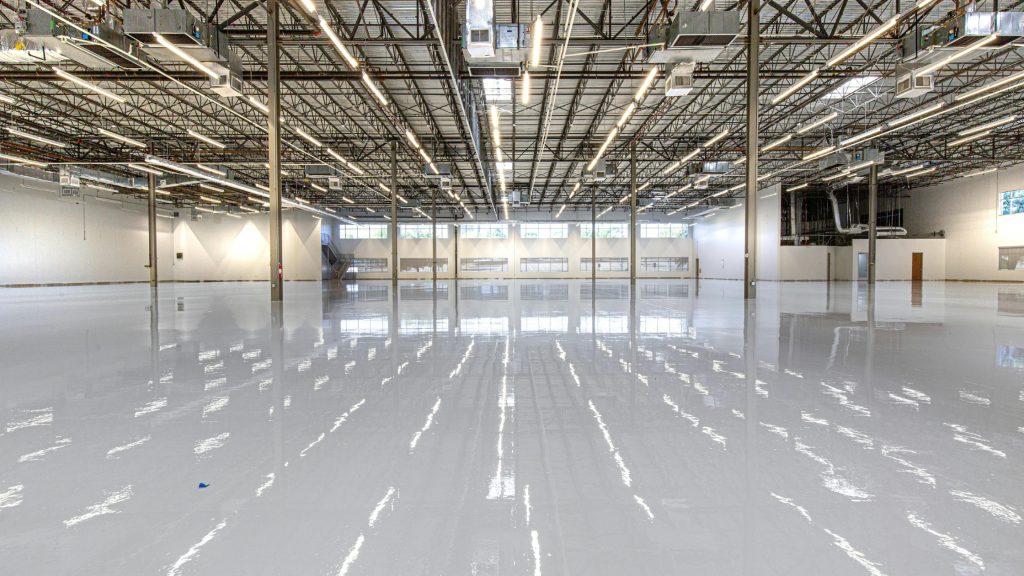
Epoxy flooring is preferred for heavy-duty industrial areas because it offers strength, durability, chemical resistance, cleanability, safety, and long-term value. It helps protect concrete floors from daily industrial stress and supports smoother operations in factories, warehouses, automobile plants, engineering units, food processing areas, and pharma facilities.
But the success of epoxy flooring depends on more than the product alone. Proper surface preparation, correct system selection, skilled application, and quality checks are equally important.
At Chemsol Polymer, every flooring recommendation is based on real site conditions, operational demands, and long-term performance needs. From industrial flooring and protective coatings to waterproofing and surface protection systems, Chemsol helps businesses create floors that are built to perform under pressure.
To choose the right epoxy flooring system for your facility, connect with Chemsol Polymer for expert guidance and technical support.