
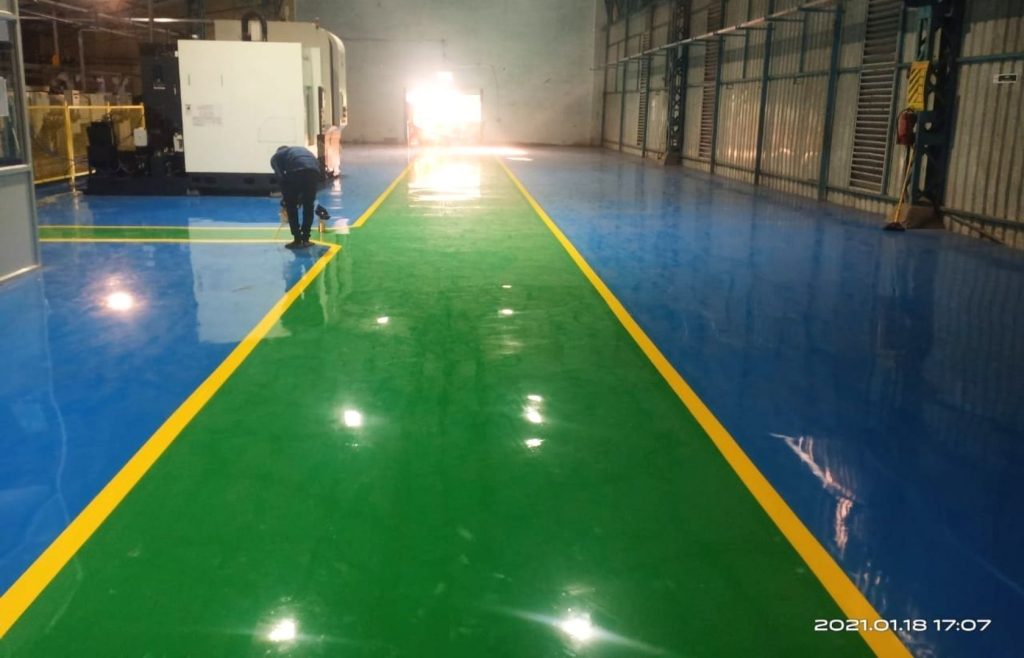
Have you ever wondered why industrial epoxy floors crack, peel, or fail much sooner than expected?
Installing Industrial Epoxy Flooring without the right preparation can cost you safety, durability, and long-term performance.
In industrial and commercial environments, flooring is under constant pressure.
Heavy foot traffic, forklifts, pallet movement, chemical spills, washdowns, vibration, and temperature changes all act on the surface every single day.
When Installing Industrial Epoxy Flooring without a system-based approach, floors deteriorate faster than expected.
This leads to safety risks, downtime, repeated repairs, and rising lifecycle costs.
This is where Chemsol Polymer makes a difference.
Chemsol Polymer designs and delivers high-performance industrial epoxy flooring systems that are engineered for real operating conditions.
Each system is built using advanced resin technology, correct surface preparation, and controlled application methods.
In this in-depth guide, we share 9 must-know tips before Installing Industrial Epoxy Flooring, based on Chemsol Polymer’s practical experience across industrial, healthcare, commercial, and processing environments.
Why Installing Industrial Epoxy Flooring Requires a System-Based Approach
Installing Industrial Epoxy Flooring is not just about applying a coating. In industrial facilities, floors are working surfaces that face constant operational stress.
When epoxy flooring is treated as a simple layer rather than an engineered system, early failure becomes unavoidable.
Industrial floors are exposed to multiple stresses every day, including:
- Continuous pedestrian and vehicle traffic
- Mechanical loads and vibration from equipment
- Chemical exposure from processes and cleaning
- Moisture from washdowns and humidity
- Temperature changes that cause expansion and contraction
If these conditions are not addressed during installation, epoxy floors can crack, peel, or lose adhesion over time.
Chemsol Polymer follows a system-based approach to Installing Industrial Epoxy Flooring.
Each project is designed as a complete flooring system that includes proper surface preparation, compatible primers, functional epoxy layers, and protective topcoats.
This approach allows Chemsol Polymer to:
- Improve adhesion and surface strength
- Enhance resistance to chemicals and moisture
- Maintain flexibility under thermal movement
- Integrate anti-skid safety where required
- Extend floor life with lower maintenance needs
By treating epoxy flooring as a performance system rather than a decorative finish, Chemsol Polymer delivers durable, safe, and reliable industrial floors built for real operating conditions.
9 Must-Know Tips Before Installing Industrial Epoxy Flooring
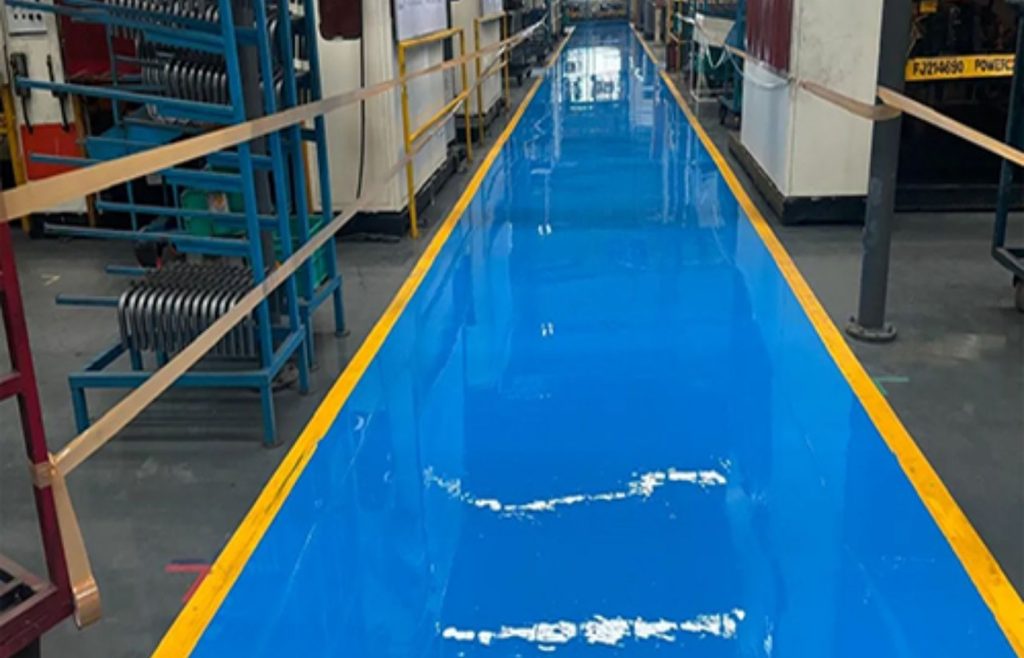
1. Evaluate Real-World Traffic and Load Conditions
Before Installing Industrial Epoxy Flooring, it is essential to understand how the floor will actually be used, not how it is expected to be used on paper.
Many epoxy floors fail early because the system was not designed for real operational stress.
Chemsol Polymer begins by analysing actual traffic patterns and load conditions across the facility.
This includes how frequently people move through the space, where forklifts and pallet trucks operate, and where heavy machinery remains stationary or moves regularly.
Key factors Chemsol Polymer evaluates include:
- Pedestrian density and movement frequency
- Forklift routes, turning points, and braking zones
- Static loads from heavy equipment and racks
- Dynamic loads and vibration from machinery
This evaluation ensures that the epoxy flooring system selected during Installing Industrial Epoxy Flooring can handle abrasion, pressure, and repeated movement without surface wear, cracking, or dusting.
2. Select the Right Epoxy Flooring System for the Application
Not every epoxy system delivers the same level of performance. Selecting the wrong system is one of the most common causes of premature failure when Installing Industrial Epoxy Flooring.
Chemsol Polymer offers multiple epoxy flooring systems, each engineered for specific operational requirements.
The correct system is chosen based on how the floor will perform over time, not just how it looks after installation.
Chemsol Polymer selects epoxy systems based on needs such as:
- Resistance to heavy traffic and mechanical wear
- Protection against chemical exposure
- Seamless finishes for hygiene-critical areas
- Anti-skid performance for safety
By matching the epoxy system to the application, Chemsol Polymer ensures long-term durability and consistent performance across industrial environments.
3. Never Compromise on Surface Preparation
Surface preparation is the foundation of every successful epoxy floor. Even the highest-quality epoxy will fail if the substrate is not properly prepared.
During Installing Industrial Epoxy Flooring, Chemsol Polymer follows strict preparation procedures to ensure proper bonding between the epoxy system and the concrete substrate.
Preparation typically includes:
- Mechanical surface profiling to open concrete pores
- Removal of laitance, dust, oils, and contaminants
- Crack and joint treatment to prevent future movement
- Substrate strength and integrity verification
This process ensures strong adhesion and prevents peeling, delamination, and uneven finishes.
4. Address Moisture Conditions Before Installation
Moisture-related issues are one of the leading causes of epoxy flooring failure.
Ignoring moisture conditions during Installing Industrial Epoxy Flooring often results in blistering, loss of adhesion, and coating breakdown.
Chemsol Polymer evaluates moisture conditions thoroughly before installation, including:
- Moisture content within the concrete
- Vapor transmission risk from below the slab
- Exposure to washdowns, spills, or humidity
Where moisture risks exist, Chemsol Polymer integrates moisture-tolerant primers and waterproofing performance into the epoxy system to ensure long-term stability.
5. Plan for Chemical Exposure in Advance
One of the most overlooked mistakes while Installing Industrial Epoxy Flooring is failing to plan for chemical exposure.
In many industrial environments, chemicals are not occasional accidents, they are part of daily operations.
Without a properly engineered epoxy system, chemicals gradually penetrate the surface and weaken the floor from within.
This results in staining, surface softening, loss of adhesion, and eventual coating failure.
Chemsol Polymer evaluates chemical exposure before installation by assessing:
- Types of chemicals used in daily operations
- Frequency and duration of chemical contact
- Cleaning agents and sanitation chemicals
- Spill-prone zones and process areas
Based on this assessment, Chemsol Polymer designs chemical-resistant epoxy flooring systems that form a dense, protective barrier.
These systems prevent penetration, preserve surface strength, and maintain performance even in aggressive environments.
This planning step is essential when Installing Industrial Epoxy Flooring in chemical plants, pharmaceutical facilities, laboratories, and industrial processing zones.
6. Integrate Safety and Anti-Skid Performance
Safety is not optional in industrial flooring. Over time, even high-quality epoxy floors can become polished due to traffic, moisture, and operational wear.
This significantly increases slip and accident risks.
During Installing Industrial Epoxy Flooring, Chemsol Polymer integrates safety directly into the system design rather than treating it as an afterthought.
Chemsol Polymer evaluates safety needs based on:
- Presence of water, oils, or process liquids
- Traffic intensity and movement speed
- Slopes, ramps, and transition zones
- Regulatory safety requirements
To address these risks, Chemsol Polymer incorporates controlled anti-skid textures within the epoxy system.
These textures improve traction while maintaining seamlessness, durability, and ease of cleaning.
This balance ensures long-term safety without compromising hygiene or maintenance efficiency.
7. Ensure Correct System Thickness and Layering
Epoxy flooring performance is not determined by a single coat.
The long-term success of Installing Industrial Epoxy Flooring depends on correct system thickness and layering.
Applying insufficient thickness or skipping system components reduces load-bearing capacity and wear resistance, leading to early failure.
Chemsol Polymer designs epoxy flooring as a layered system that includes:
- Primers to ensure deep penetration and adhesion
- Functional epoxy layers to handle mechanical stress
- Protective topcoats to resist abrasion and chemicals
Each layer serves a specific purpose and works together as a unified system.
This engineered layering ensures consistent performance, prevents delamination, and extends floor life even under heavy operational stress.
8. Plan Installation Around Operational Downtime
Industrial facilities cannot afford uncontrolled shutdowns. Poor scheduling during Installing Industrial Epoxy Flooring can disrupt production, increase safety risks, and delay operations.
Chemsol Polymer plans installation timelines carefully to align with operational realities and minimise disruption.
Key planning considerations include:
- Identifying low-activity or shutdown windows
- Sequencing installation in phases where required
- Managing curing times for safe re-entry
- Ensuring safety during application and curing
This structured approach allows floors to be installed efficiently while keeping operations functional and safe.
Proper planning ensures the facility benefits from upgraded flooring without unnecessary downtime.
9. Define a Long-Term Maintenance Strategy Early
Many industrial floors fail not because they are overused, but because maintenance was never planned.
A successful epoxy floor requires clarity on how it will be maintained over its lifecycle.
During Installing Industrial Epoxy Flooring, Chemsol Polymer designs systems that prioritise long-term durability and low maintenance.
Maintenance planning includes:
- Selecting abrasion-resistant epoxy systems
- Designing seamless surfaces to simplify cleaning
- Reducing joint-related wear and contamination risks
- Minimising the need for frequent repairs
By planning maintenance from the start, Chemsol Polymer helps facilities reduce lifecycle costs, avoid repeated shutdowns, and extend floor service life significantly.
How Chemsol Polymer Executes Industrial Epoxy Flooring Projects
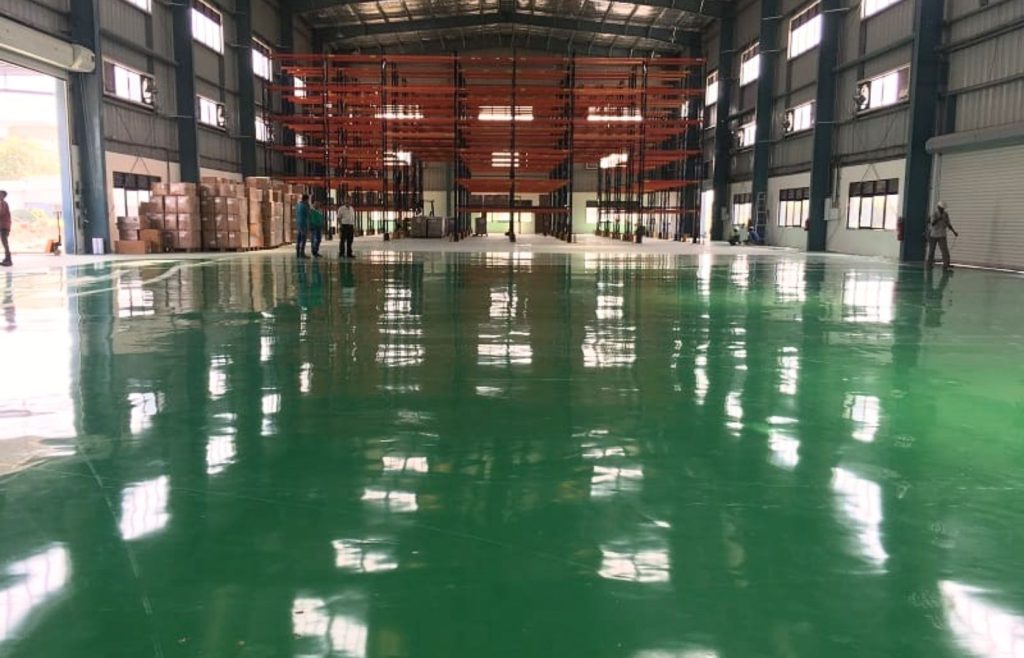
At Chemsol Polymer, we execute industrial epoxy flooring projects as complete systems designed to meet the specific needs of each facility.
Here’s how we approach the process:
- Site Assessment: We evaluate traffic patterns, load conditions, chemical exposure, moisture levels, and safety requirements to choose the right flooring system.
- System Selection: Based on site evaluation, we select the appropriate high-performance epoxy system from our product range, tailored for durability, abrasion resistance, and chemical protection.
- Surface Preparation: We perform mechanical profiling, repair cracks and joints, and conduct moisture testing to ensure proper adhesion and prevent water-related damage.
- Primer Application: We apply primers to ensure deep bonding between the epoxy system and the substrate, enhancing long-term adhesion.
- Epoxy Resin Application: We apply multiple layers of epoxy resin to achieve the required thickness for high mechanical strength, chemical resistance, and durability. Each layer is designed to resist mechanical damage, impact, and chemicals.
- Curing Process: We ensure the correct curing conditions (temperature and humidity) to achieve full hardness and adhesion, ensuring optimal performance and durability.
- Post-Installation Inspection: We conduct a thorough inspection to ensure a seamless, uniform finish and verify performance characteristics such as adhesion strength and resistance.
- Ongoing Maintenance and Support: We offer maintenance support to ensure long-term performance and provide guidance on cleaning methods, addressing minor issues, and maintaining the floor in optimal condition.
This system-based approach ensures long-lasting performance, reduces downtime, and enhances the operational efficiency of your facility while offering reliable floor protection.
Industries That Benefit from Chemsol Polymer Epoxy Flooring
Chemsol Polymer’s epoxy flooring systems are tailored to meet the specific needs of various industries, ensuring long-lasting performance and durability in demanding environments.
- Manufacturing and Engineering Plants: Our epoxy systems withstand heavy foot traffic, mechanical stress, and chemical exposure, ensuring a resilient surface that reduces downtime and maintenance costs.
- Warehouses and Logistics Centres: Designed for high-traffic areas, Chemsol Polymer’s epoxy flooring resists impact and wear from forklifts and pallet trucks, enhancing efficiency and safety.
- Pharmaceutical and Healthcare Facilities: Our seamless, easy-to-clean flooring meets stringent hygiene standards while offering resistance to chemicals, moisture, and heavy use, ensuring compliance and cleanliness.
- Commercial and Institutional Buildings: With a professional, durable finish, our epoxy flooring systems provide an attractive, low-maintenance surface for high-traffic areas like hallways, classrooms, and offices.
Each system is designed to deliver performance, safety, and durability specific to the operational demands of these industries.
Why Choose Chemsol Polymer for Installing Industrial Epoxy Flooring
Facilities choose Chemsol Polymer because our epoxy flooring systems are specifically engineered for performance, safety, and long-term durability:
- Engineered Epoxy Systems: Custom-designed for each facility’s specific needs, ensuring optimal performance under real-world conditions.
- Safety and Compliance: Built-in safety features like anti-skid finishes and chemical resistance, ensuring compliance with industry regulations.
- Integrated Waterproofing: Protection against moisture, chemicals, and wear, preserving floor integrity and reducing maintenance.
- Long-Term Durability: Resistant to abrasion, impact, and heavy traffic, reducing the need for frequent repairs or replacements.
- Expert Application: Our trained team ensures proper surface preparation and flawless application, guaranteeing lasting performance.
With Chemsol Polymer, you get a reliable, high-performance flooring solution tailored to your operational demands.
Conclusion
Installing Industrial Epoxy Flooring is an investment in safety, efficiency, and long-term performance.
When designed and applied correctly, epoxy flooring:
- Extends floor life
- Reduces maintenance costs
- Improves safety
- Supports regulatory compliance
Chemsol Polymer provides high-performance epoxy flooring systems engineered for demanding industrial environments.
If your facility is planning a new floor or an upgrade, choose a system designed to perform under real conditions.
Contact Chemsol Polymer today to discuss epoxy flooring solutions built for durability, safety, and long-term reliability.
FAQs
Q. Is Installing Industrial Epoxy Flooring suitable for heavy industrial use?
A: Yes. Chemsol Polymer epoxy systems are engineered for high-traffic and high-load environments.
Q. Can epoxy flooring include waterproofing performance?
A: Yes. Chemsol Polymer integrates waterproofing where required during Installing Industrial Epoxy Flooring.
Q. Are Chemsol Polymer epoxy floors easy to maintain?
A: Yes. Seamless epoxy surfaces reduce cleaning effort and long-term maintenance costs.