
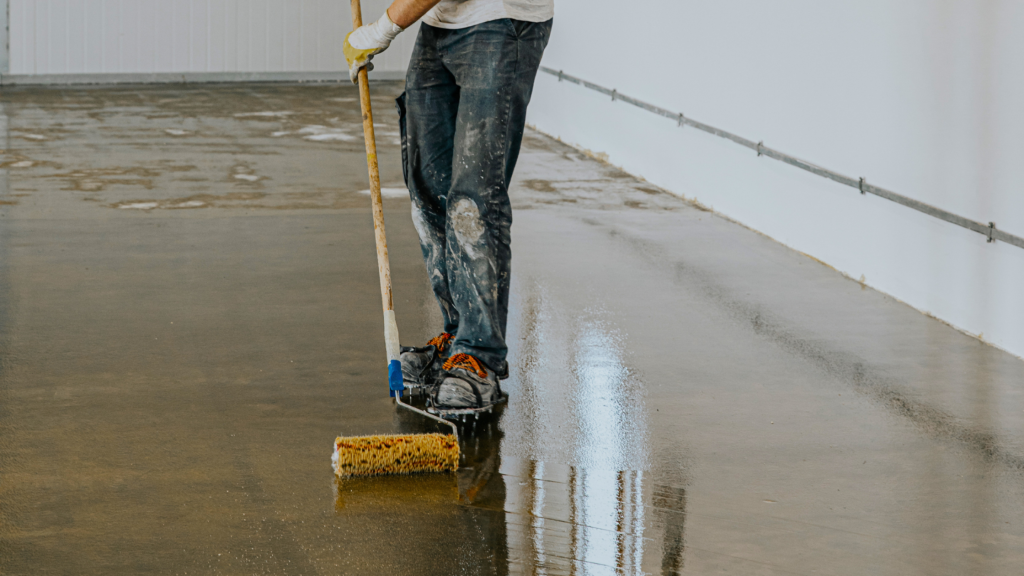
Are you planning to apply epoxy, PU, anti-skid, chemical-resistant, or waterproof floor coating in your industrial facility?
Will the coating withstand heavy machinery, forklift movement, chemical exposure, moisture, oil, water, and daily industrial traffic?
Most importantly, will the coating bond strongly to the existing concrete surface and deliver long-term performance?
Surface preparation is one of the most important factors behind the success of any floor coating system. A high-quality floor coating can only perform well when the surface below it is clean, strong, dry, repaired, and properly prepared. If the base surface is weak, contaminated, dusty, oily, damp, or uneven, even the best coating material can fail before its expected life.
Many floor coating failures do not happen because the coating system is poor. They happen because the surface was not prepared correctly before application. Issues such as peeling, bubbling, delamination, cracks, uneven finish, moisture failure, and early wear often begin below the coating layer.
This is why businesses must pay close attention to surface preparation before starting any industrial flooring or coating project.
Industries across India use advanced flooring systems such as epoxy flooring, polyurethane flooring, anti-skid coatings, waterproofing systems, chemical-resistant coatings, and floor densification solutions for demanding environments. Chemsol Polymer’s website highlights floor coating, waterproofing, coating, floor densification, and market segments such as automobile and engineering, car park/deck flooring, chemicals and fertilizers, food/pharma/healthcare, commercial/residential/new construction, and paint and coatings.
However, the long-term performance of these systems depends heavily on how well the concrete surface is prepared before the coating is applied.
This detailed guide explains six critical surface preparation steps that determine the life, bonding strength, durability, safety, and performance of any floor coating.
Why Surface Preparation Is Critical for Floor Coating Performance
Surface preparation plays a vital role in the success of any industrial floor coating system. Before a coating is applied, the concrete surface must be checked, cleaned, repaired, profiled, and tested properly. If the surface is not ready, the coating may not bond correctly.
Industrial floors are exposed to extreme working conditions every day. They face heavy machinery, forklift traffic, chemical spills, water exposure, oil and grease, impact, abrasion, temperature changes, and constant operational movement.
A properly prepared surface helps the coating resist these conditions for a longer period.
Poor surface preparation can lead to several flooring problems, such as:
- Coating peeling
- Floor coating delamination
- Blistering or bubbling
- Uneven coating finish
- Cracks appearing through the coating
- Weak adhesion
- Moisture-related failure
- Frequent repair and maintenance costs
For industries such as automobile manufacturing, engineering units, warehouses, pharmaceutical facilities, food processing plants, chemical plants, car parks, and commercial infrastructure, floor coating is not just about appearance. It is a protective system that supports safety, hygiene, durability, and smooth operations.
A professionally prepared and coated floor can protect the concrete substrate, improve workplace safety, resist chemical damage, reduce dusting, support cleaning, and reduce long-term maintenance problems.
Companies like Chemsol Polymer provide flooring, waterproofing, protective coating, and floor densification solutions for demanding industrial and commercial environments. But before any coating system can deliver long-term value, the surface must be prepared correctly.
6 Critical Surface Preparation Steps That Determine the Life of Any Floor Coating
1. Site Inspection and Existing Floor Assessment
The first step in surface preparation is a detailed site inspection. Before applying any floor coating, the existing concrete surface must be carefully assessed because every facility has different flooring conditions, usage patterns, traffic loads, exposure risks, and performance requirements.
A proper floor assessment helps identify whether the surface is suitable for coating or whether it needs repair, cleaning, moisture control, or mechanical preparation before application.
During site inspection, flooring professionals usually check:
- Existing concrete condition
- Surface cracks
- Oil or chemical contamination
- Moisture problems
- Hollow or weak areas
- Uneven floor levels
- Previous coating layers
- Dusting or surface laitance
- Load and traffic requirements
- Chemical exposure risks
- Drainage and water exposure conditions
Skipping this step can lead to incorrect coating selection and poor surface preparation. For example, a warehouse floor with forklift traffic may need a different preparation method compared to a pharmaceutical facility that requires seamless hygienic flooring. Similarly, a chemical plant floor exposed to acids, solvents, oils, or aggressive cleaning agents may require stronger preparation and a chemical-resistant coating system.
A site inspection helps determine the right preparation method before any coating material is applied. A professional flooring contractor should not recommend a coating system without first understanding the actual site condition.
The assessment should answer important questions such as:
- Is the concrete strong enough for coating?
- Is there moisture coming from below the slab?
- Are there cracks that need repair?
- Is the existing coating failing?
- Is the floor exposed to chemicals or oils?
- What type of surface profile is required?
- What coating system will suit the facility?
- Will the floor face heavy movement or impact?
This step is important because surface preparation cannot follow a one-size-fits-all approach. A new concrete floor may need curing checks, moisture testing, and surface profiling. An old industrial floor may need grinding, oil removal, crack repair, and removal of failed coatings. A floor in a chemical unit may need deeper cleaning, stronger repair, and special coating recommendations.
A strong inspection process reduces the risk of coating failure and ensures that the floor coating system is designed for the real working environment.
2. Cleaning and Removal of Contaminants
The second critical step is cleaning the concrete surface and removing all contaminants. A floor coating needs direct contact with the concrete surface to bond properly. If dust, oil, grease, chemicals, curing compounds, loose particles, or previous coating residues are present, the coating may fail to adhere.
Surface contamination is one of the most common reasons for floor coating failure. Industrial floors often collect oil and grease, dust, dirt, chemical residues, cement laitance, paint marks, tire marks, old adhesives, water stains, loose concrete particles, and previous coating materials.
Even small amounts of contamination can reduce bonding strength.
For example, oil can penetrate deep into concrete pores. If it is not removed properly, the coating may peel or separate from the surface. Similarly, dust left after grinding or mechanical preparation can create a weak layer between the floor and the coating.
Cleaning should be done before and after mechanical preparation. Common cleaning methods include:
- Industrial vacuum cleaning
- Degreasing
- Scrubbing
- Pressure washing where suitable
- Chemical cleaning where required
- Dust removal before primer application
- Removal of loose particles and debris
The goal is to create a clean surface that allows the coating to bond directly with the concrete. In industrial environments, simple broom cleaning is not enough for professional floor coating work. The surface must be free from loose particles, oil, moisture, and chemical contamination before the coating system begins.
If the floor has existing oil stains, the contractor should identify whether the oil is only on the surface or has penetrated deeper into the concrete. Deep contamination may require repeated degreasing, grinding, or special treatment.
For chemical plants and engineering facilities, cleaning becomes even more important because residues can react with coating materials or weaken adhesion. For food, pharma, and healthcare facilities, cleaning also supports hygiene and helps create a seamless surface suitable for controlled environments.
A properly cleaned surface improves:
- Coating adhesion
- Surface finish
- Chemical resistance
- Coating durability
- Long-term performance
- Maintenance efficiency
Cleaning may look like a basic step, but it has a major impact on coating life. If contaminants remain trapped under the coating, the floor may start showing bubbles, peeling, or weak patches within a short period.
Professional surface preparation ensures that the floor is completely clean before moving to the next stage.
3. Mechanical Grinding or Shot Blasting
Mechanical surface preparation is one of the most important steps in floor coating installation. After cleaning, the concrete surface must be mechanically prepared to create the right surface profile.
A floor coating does not bond well to a smooth, dense, weak, or sealed surface. It needs a properly profiled surface so the primer and coating can grip the concrete. Mechanical preparation helps remove weak layers, open concrete pores, and create a strong bonding surface.
Common mechanical preparation methods include:
- Diamond grinding
- Shot blasting
- Scarifying
- Sanding
- Surface abrasion
- Mechanical profiling
- Removal of old coating layers
The method depends on the floor condition, coating system, and required performance. Diamond grinding is commonly used to remove surface irregularities, old coatings, laitance, and minor imperfections. Shot blasting is often used for stronger surface profiling, especially in industrial areas where heavy-duty coatings are required. Scarifying may be used when deeper surface removal is needed.
The purpose of this step is not just to make the floor look clean. It is to create the correct mechanical bond.
A coating applied over a smooth or unprepared concrete surface may not penetrate or adhere properly. This can result in:
- Peeling
- Delamination
- Uneven thickness
- Poor wear resistance
- Early coating failure
Mechanical preparation also helps remove laitance. Laitance is a weak, powdery cement layer that often forms on the surface of concrete. If coating is applied over laitance, the coating bonds to the weak layer instead of the strong concrete below it. When the weak layer breaks, the coating fails with it.
That is why professional surface preparation removes laitance and exposes a stronger concrete surface.
The level of surface profile depends on the type of coating. Thin coatings may need a lighter profile, while heavy-duty epoxy or PU systems may need a stronger profile. Anti-skid coatings may require controlled texture, and chemical-resistant coatings may need a surface that allows strong primer penetration.
This is where contractor experience matters. Over-grinding can damage the surface, while under-preparation can reduce coating adhesion. A professional contractor understands how much profiling is needed for the selected coating system.
Chemsol Polymer’s product range includes epoxy, ESD, chemical-resistant epoxy, PU, PU concrete, waterproofing, and water-based epoxy categories, which makes correct surface preparation essential before applying the right system.
Mechanical preparation is the step that connects the coating system to the concrete. If this step is done correctly, the coating gets a strong foundation. If it is skipped or done poorly, even premium coating materials may not perform as expected.
4. Crack Repair and Surface Defect Correction
Before applying any floor coating, cracks and surface defects must be repaired. Concrete floors often develop cracks, holes, joints, uneven patches, damaged sections, and weak areas over time. If these defects are ignored, they can affect the coating system after installation.
A coating may cover the floor visually, but it cannot solve structural defects unless they are repaired first.
Common surface defects include:
- Hairline cracks
- Wide cracks
- Joint damage
- Potholes
- Surface spalling
- Hollow patches
- Uneven areas
- Broken edges
- Weak concrete sections
These defects must be identified during inspection and repaired before coating begins.
Crack repair is especially important because cracks can allow moisture, chemicals, and air to move through the concrete. If the coating is applied directly over untreated cracks, those cracks may reflect through the coating later. This can reduce durability and create weak points in the floor.
Repair methods may include:
- Crack filling
- Epoxy mortar repair
- Joint treatment
- Patching compounds
- Surface levelling
- Removal of weak concrete
- Rebuilding damaged sections
The repair method depends on the type and severity of the defect. Small hairline cracks may need filling before primer application. Larger cracks may require routing, cleaning, and filling with appropriate repair material. Damaged joints may need proper joint treatment to allow controlled movement. Potholes and spalled areas may require patch repair before coating.
Surface defect correction helps create a uniform base for the coating system. It improves coating appearance, coating thickness consistency, load-bearing performance, safety, cleanability, and long-term durability.
In industries where heavy movement is common, such as automobile plants, warehouses, and engineering units, damaged concrete can worsen quickly if left untreated. Forklifts and machinery can increase crack movement and break weak sections. In food, pharma, and healthcare facilities, cracks and joints can also collect dust, moisture, and contaminants.
That is why repairs are not optional. They are part of the coating performance system.
A professional flooring contractor should repair defects before applying primer or coating. If the contractor applies coating directly over damaged concrete, the final floor may look good at first but fail early under pressure.
Good surface preparation means creating a strong, stable, and uniform base. Only then can the coating system perform properly.
5. Moisture Testing and Moisture Control
Moisture is one of the biggest hidden risks in floor coating projects. A concrete floor may look dry on the surface, but moisture can still be present inside the slab or rising from below. If moisture is not tested and controlled before coating, it can cause serious failure.
Moisture-related coating problems include:
- Blistering
- Bubbling
- Peeling
- Delamination
- White patches
- Weak bonding
- Damp spots
- Coating softening
Concrete is porous. It can absorb and release moisture depending on site conditions. Moisture can come from groundwater, poor vapor barriers below the slab, water leakage, cleaning water, new concrete curing, humid site conditions, and drainage issues.
Before applying floor coating, moisture levels should be checked properly. This is especially important for epoxy and other resin-based coating systems because moisture can interfere with bonding and curing.
If coating is applied over a damp surface, trapped moisture may push against the coating and create bubbles or peeling. Moisture testing helps decide whether the floor is ready for coating or requires additional treatment.
Depending on the site condition, moisture control may include:
- Waiting for concrete to dry
- Improving ventilation
- Using moisture barriers
- Applying suitable primers
- Repairing water leakage
- Treating damp areas
- Selecting moisture-tolerant systems where suitable
New concrete floors need special attention. They should be properly cured before coating. Applying coating too early can trap moisture inside the slab. Old industrial floors also need moisture checks, especially in areas exposed to washing, chemicals, water leakage, or ground moisture.
Moisture control is very important in food processing units, pharmaceutical plants, chemical facilities, car parks, basements, commercial kitchens, warehouses, and manufacturing units. Moisture testing protects the coating system from hidden failure. Without this step, the floor may appear properly installed but begin failing within months.
A professional flooring contractor should always check moisture conditions before selecting and applying the coating system.
Chemsol Polymer provides waterproofing and protective coating solutions in addition to industrial flooring systems, which is important for facilities where moisture protection and surface durability are connected.
Moisture control is not just a technical step. It is a long-term protection step that helps ensure the coating bonds properly, cures correctly, and performs under real site conditions.
6. Primer Application and Final Surface Readiness Check
The final step before applying the main floor coating is primer application and surface readiness confirmation. Primer acts as a bonding layer between the concrete surface and the coating system. It helps improve adhesion, seals the surface, and prepares the floor for the next coating layers.
Even after cleaning, grinding, repair, and moisture testing, the surface must be checked again before primer application.
The final readiness check should confirm:
- The surface is clean
- The surface is dry
- Dust has been removed
- Cracks are repaired
- Moisture levels are acceptable
- Surface profile is suitable
- No loose particles remain
- No oil or chemical contamination is present
Primer should only be applied when the surface is fully ready. If dust remains on the floor, the primer may bond to dust instead of concrete. If moisture is present, the primer may not cure properly. If cracks are not repaired, defects may continue below the coating.
Primer selection also matters. Different coating systems may require different primers depending on surface condition and performance requirements.
For example:
- Epoxy systems may need epoxy primers.
- PU systems may need compatible primers.
- Moisture-prone areas may need moisture-tolerant primers.
- Heavy-duty areas may need stronger bonding systems.
The primer must be applied evenly and according to system requirements. Poor primer application can affect the entire coating system. If the primer is too thin, too thick, uneven, or applied over a contaminated surface, the coating may fail later.
A good primer application improves adhesion strength, surface sealing, coating uniformity, long-term durability, chemical resistance, and wear performance.
After primer application, the contractor should follow the correct waiting time before applying the next layer. Applying the topcoat too early or too late can affect bonding between layers. This is why timing, site conditions, and technical process control matter.
The final surface readiness check is the quality control step that ensures all preparation work has been completed properly. A professional team should not rush this stage.
Industrial floor coating is a system, and every layer depends on the layer below it. If the primer bonds well to the surface, the coating system has a much stronger chance of lasting longer. If the primer fails, the entire system can fail.
That is why primer application and final inspection are critical surface preparation steps.
Why These Surface Preparation Steps Matter Before Floor Coating
Following the right surface preparation steps before coating is extremely important. Industrial floor coating is not a small cosmetic upgrade. It is a protective and operational investment that directly affects safety, durability, maintenance costs, hygiene, and the lifespan of the facility floor.
When industries skip preparation or choose contractors who rush the process, the results often include peeling coating, moisture damage, cracked surfaces, weak bonding, chemical damage, and frequent repairs. These issues can disrupt operations and lead to higher long-term costs.
Here are some key reasons why these surface preparation steps matter.
1. Prevents Early Coating Failure
Industrial floors operate under extreme conditions every day. Heavy machinery, forklifts, chemical spills, oil exposure, water, and temperature changes constantly stress the coating system.
If the surface is dusty, oily, damp, weak, or smooth, the coating may peel or delaminate. Proper surface preparation creates a strong bonding surface and reduces the risk of early failure.
2. Improves Coating Adhesion
Floor coatings need strong adhesion to perform under industrial stress. Mechanical grinding, cleaning, moisture testing, crack repair, and primer application all help improve adhesion.
Strong adhesion means the coating can better withstand traffic, cleaning, chemicals, machinery movement, and regular wear.
3. Ensures the Right Flooring System for the Facility
Different industries require different flooring technologies. Pharmaceutical facilities may require seamless hygienic flooring, automobile plants may need abrasion-resistant floors, and chemical units may need chemical-resistant coatings.
Surface preparation helps contractors understand the condition of the floor and recommend the right coating system based on actual site requirements.
4. Improves Workplace Safety
Industrial flooring plays a major role in workplace safety. Uneven floors, peeling coatings, cracks, dusting, and slippery surfaces can create safety risks for employees and equipment operators.
Correct preparation helps create a smoother, stronger, safer, and more reliable coating system. Anti-skid coatings and seamless floors also perform better when installed on a properly prepared surface.
5. Protects Concrete from Moisture and Chemicals
Industrial facilities often face exposure to water, oils, chemicals, acids, solvents, and cleaning agents. Without proper coating adhesion, these substances can penetrate the floor and damage the concrete structure.
Proper preparation helps the protective coating perform as intended and protects the concrete below from long-term deterioration.
6. Reduces Long-Term Maintenance Costs
Many businesses focus only on the initial flooring cost. However, poor surface preparation can lead to frequent maintenance, recoating, shutdowns, and repairs.
When the surface is prepared correctly, the coating system lasts longer, performs better, and reduces the need for repeated repair work.
7. Builds Confidence Before Making the Investment
Industrial flooring and coating projects often involve large areas and significant investment. Proper preparation gives businesses confidence that the floor coating system is being installed on a strong and suitable base.
When the contractor explains the preparation method clearly, it becomes easier to trust the process and understand the long-term value of the coating system.
Signs of Poor Surface Preparation Before Floor Coating
Before choosing a floor coating contractor, it is important to recognize warning signs that may indicate poor surface preparation. These signs can help industries avoid coating failure, safety issues, and costly repair work.
Some common red flags include:
- No site inspection before quotation
- No moisture testing
- No discussion about surface profile
- Coating applied directly over old damaged coating
- Cracks ignored before application
- Oil stains not treated properly
- Dust not removed after grinding
- No primer recommendation
- Extremely fast installation promises without proper assessment
- No explanation of preparation methods
These signs may indicate that the contractor is focusing only on coating application instead of complete surface preparation. Poor preparation may reduce the initial project cost, but it can lead to expensive problems later.
Industrial floors must support daily operations. A failed coating can affect safety, hygiene, production flow, cleaning, movement, and maintenance planning. This is why businesses should ask contractors about their surface preparation process before approving any floor coating project.
A reliable contractor should be able to explain:
- How the floor will be inspected
- How will contamination be removed
- Which mechanical preparation method will be used
- How cracks and defects will be repaired
- How will moisture be checked
- Which primer system will be applied
- How will the final quality be controlled
In simple terms, surface preparation is the foundation of coating performance. If the foundation is weak, the coating system cannot deliver long-term results.
Why Choose Chemsol Polymer for Industrial Floor Coating Solutions?
Choosing the right flooring partner is essential for ensuring durability, safety, and long-term coating performance. Industrial flooring requires technical understanding, product knowledge, proper surface preparation, and professional application experience.
Chemsol Polymer provides flooring, waterproofing, protective coating, and floor densification solutions for demanding industrial and commercial environments. Its website highlights service areas such as floor coating, waterproofing, coating, and floor densification, along with sectors including automobile and engineering, car park/deck flooring, chemicals and fertilizers, food/pharma/healthcare, commercial/residential/new construction, and paint and coatings.
A professional approach to floor coating begins before the coating is applied. It starts with understanding the surface, the facility, the traffic load, chemical exposure, moisture condition, safety needs, and expected performance.
Here is what makes Chemsol Polymer a reliable choice:
- Industry-specific flooring solutions tailored to operational requirements
- Experience with epoxy, PU, PU concrete, waterproofing, and protective coating systems
- Proper surface preparation and professional installation methods
- Flooring systems designed for heavy machinery, chemicals, moisture, and high traffic
- Solutions suitable for automobile, engineering, food, pharma, healthcare, chemical, fertilizer, commercial, and construction environments
- Focus on durability, safety, and long-term performance
For industrial facilities, floor coating is not just about appearance. It is about protecting infrastructure, improving safety, supporting operations, and reducing maintenance problems.
Working with an experienced flooring partner helps ensure that the right system is selected and installed correctly. Chemsol Polymer’s approach supports businesses that need strong, durable, and performance-driven flooring systems for demanding spaces.
Conclusion
Surface preparation is one of the most important factors that determines the life of any floor coating. A high-quality coating system can fail early if the surface below it is not properly prepared.
Every step matters. Site inspection helps understand the floor condition. Cleaning removes contaminants that block adhesion. Mechanical grinding or shot blasting creates the right bonding profile. Crack repair strengthens the surface. Moisture testing prevents hidden failure. The primer application prepares the floor for long-term coating performance.
Together, these six steps create the foundation for a durable, safe, and reliable floor coating system.
For industries that depend on strong flooring performance, surface preparation should never be rushed or ignored. Companies like Chemsol Polymer specialize in advanced industrial flooring, waterproofing, and protective coating solutions designed for demanding environments.
If your facility needs a floor coating system that lasts longer, performs better, and protects your concrete surface, proper surface preparation is the first step toward long-term success.
Looking for reliable industrial floor coating solutions? Explore Chemsol Polymer’s advanced flooring and coating systems designed to support modern industrial infrastructure.
FAQs
Q. Why is surface preparation important before floor coating?
A: Surface preparation is important because it helps the coating bond properly to the concrete floor. It removes dust, oil, weak layers, moisture issues, and surface defects that can cause peeling, blistering, or delamination.
Q. What happens if floor coating is applied without proper preparation?
A: If floor coating is applied without proper preparation, the coating may fail early. Common problems include peeling, cracks, bubbles, uneven finish, poor adhesion, moisture-related failure, and frequent repair requirements.
Q. Which surface preparation method is best for industrial floor coating?
A: The best method depends on the floor condition and coating system. Common methods include diamond grinding, shot blasting, crack repair, vacuum cleaning, moisture testing, and primer application before the final coating layers.
Q. Why does moisture testing matter before applying floor coating?
A: Moisture testing matters because trapped moisture can cause bubbling, blistering, peeling, and weak bonding. Even if the floor looks dry from the top, moisture may still be present inside the concrete slab.
Q. Can old industrial floors be coated again?
A: Yes, old industrial floors can be coated again if the existing surface is properly inspected, cleaned, repaired, and prepared. Failed coatings, oil stains, cracks, dust, and weak concrete layers must be removed before applying a new coating system.